



Simultaneous Interpretation Equipment: IR vs RF Buying Guide
Every simultaneous interpretation project eventually arrives at the same question: how does the delegate actually hear the interpreter? The answer is not a detail. It decides whether the system is secure, whether it works in a room with daylight, whether you need a radio licence, whether you are handing out two hundred receivers before every session, and whether the installation is still maintainable in year eight.
This guide compares the three delivery paths used in conference venues today — infrared (IR), radio frequency (RF), and channel selection directly on the delegate unit — and shows how to decide between them, what to put in the specification, and which details cause failures on site.
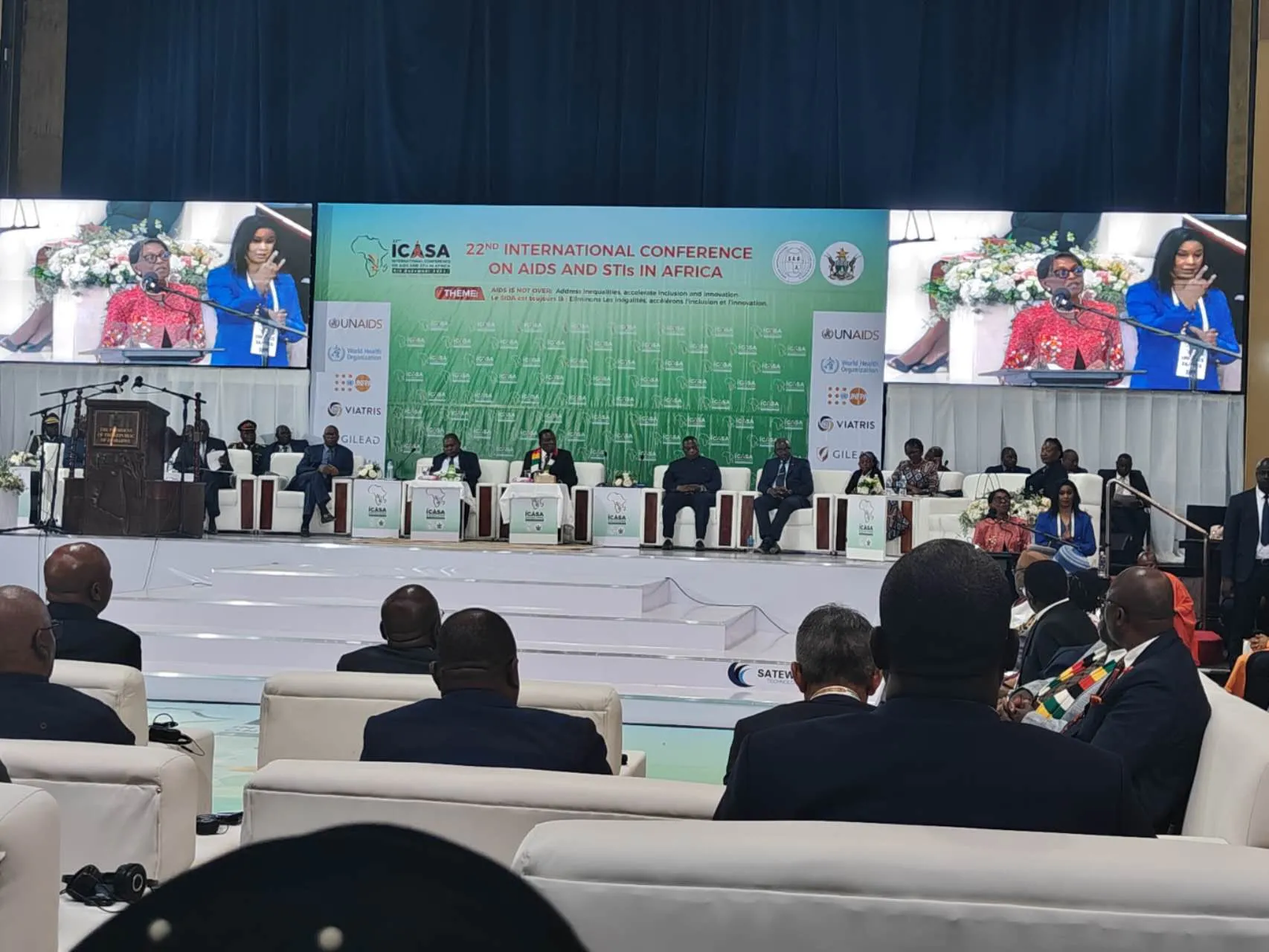
The three ways a delegate can hear the interpretation
Infrared (IR)
Audio is modulated onto an infrared light carrier and broadcast into the room from radiator panels. Delegates wear a receiver with a headset and select a language channel. Because infrared is light, it behaves like light: it stays inside the room, it does not pass through walls, and it needs a reasonably clear path from the radiator to the receiver.
The practical consequences are significant in both directions. On the security side, IR is the most confidential option available — nothing leaves the room, so a closed session stays closed. On the operational side, IR is the least forgiving option: direct sunlight on a receiver, a pillar in the wrong place, or a radiator mounted too low will produce dead spots that only appear on the day of the event.
Radio frequency (RF)
Audio is broadcast on a radio carrier — narrowband FM in older systems, digital in current ones — and picked up by portable receivers or, in some designs, by the delegate units themselves. Radio passes through walls and covers distance, which makes RF the natural choice for multi-room events, overflow areas, outdoor ceremonies and venues where installing radiators is impractical.
Two trade-offs come with that convenience. First, radio does not respect room boundaries: a confidential session can leak into the room next door or into the car park, which is why RF is rarely accepted for closed proceedings. Second, RF generally requires frequency coordination and, in many countries, a licence or at least registration — a project risk that must be resolved before the tender, not after.
Channel selection at the seat
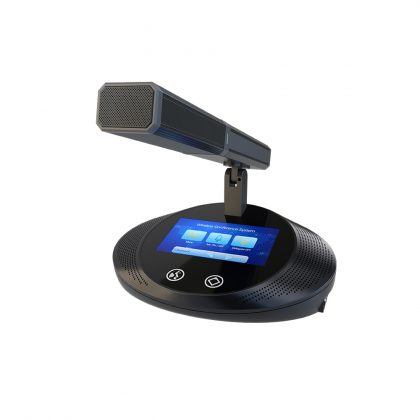
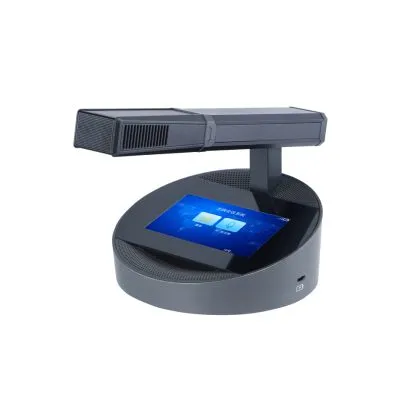
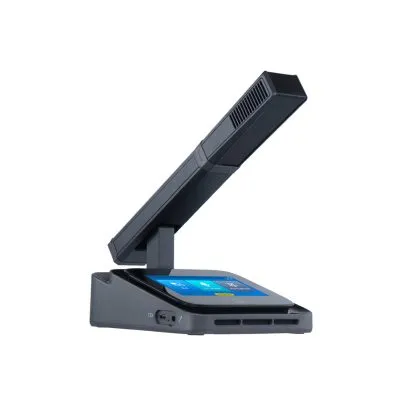
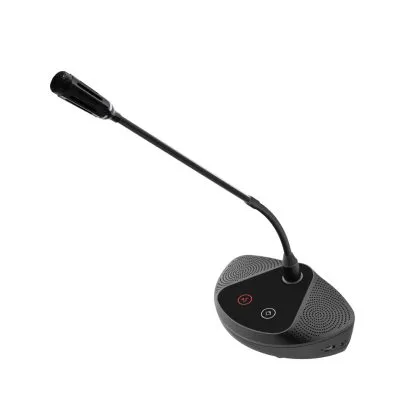
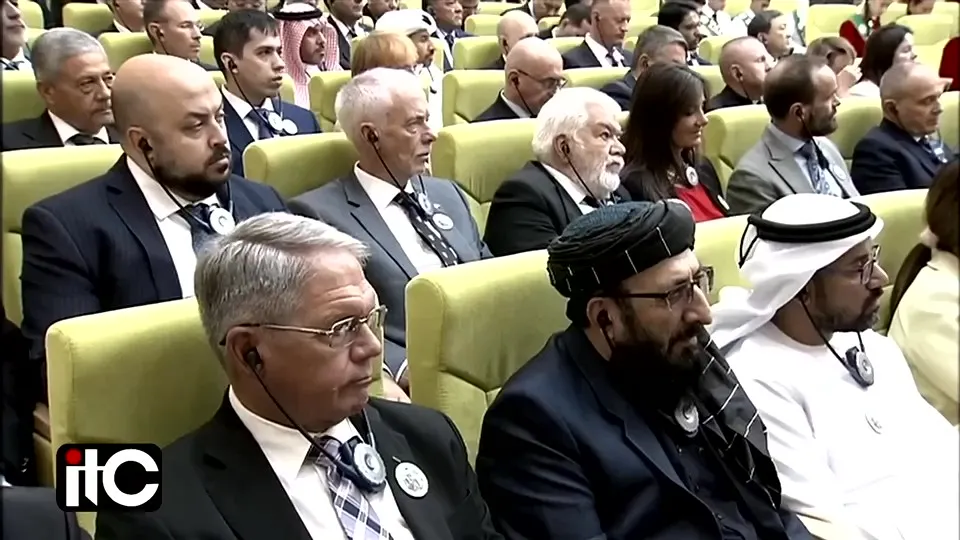
The third option removes the handset entirely. The interpretation channels are carried on the same digital conference network as the discussion audio, and the delegate selects a language on the unit at their own seat. No receivers to hand out, no batteries to charge, no inventory to reconcile.
The limitation is scope: this only works for people sitting at a delegate position. Observers, press, staff and visitors in the gallery still need a receiver of some kind, so most large chambers end up combining a seat-level channel selector with an IR or RF distribution layer for everyone else.
IR versus RF versus seat-level channels
| Criterion | Infrared (IR) | Radio frequency (RF) | Channel at the seat |
| Confidentiality | High — signal stays in the room | Low — passes through walls | High — same network as the meeting |
| Coverage | One room per radiator set; needs line of sight | Building-wide, multi-room, outdoor | Seated positions only |
| Daylight and glass | Weaker — sunlight and glazed atria cause dead spots | Unaffected | Unaffected |
| Licensing | None — light, not radio | Often required; frequency coordination needed | None |
| Receiver hardware | One receiver per listener, plus charging and inventory | One receiver per listener, plus frequency planning | None for delegates; receivers still needed for visitors |
| Channel capacity | Typically 4, 8 or 16 languages per band | Depends on band and coordination | Up to 63 + floor in current digital systems |
| Best fit | Parliaments, boardrooms, courtrooms, closed sessions | Multi-room events, outdoor, temporary installations | Fixed chambers with permanent delegate seating |
Read the table as a filter rather than a ranking. In practice the confidentiality row eliminates RF for most government and legal work, and the daylight row eliminates IR for glazed atria and outdoor ceremonies. What remains is usually obvious.
What actually decides it in practice
Five questions settle the choice faster than any product comparison.
- Is any part of the programme confidential?If yes, RF is out for that room. Closed sessions, board meetings, disciplinary hearings and legal proceedings all point to IR or seat-level channels.
- Does the audience sit inside one room?If the event spills into overflow rooms, a foyer or a marquee, radio or a networked distribution layer is required.
- Is there direct sunlight or a glazed façade?IR works in these rooms, but only with a proper radiator survey. If nobody will fund the survey, choose RF.
- Will the venue be used for one event or for ten years?Temporary events favour RF (fast, no building works). Permanent chambers favour IR or seat-level channels, where the investment is spread over years of sessions.
- Who is managing two hundred receivers?Handsets are an operational commitment: charging, cleaning, replacing batteries, tracking losses. If there is no staff member for that job, seat-level channels are worth the extra engineering.
The specification details that cause failures
Coverage survey, not a guess
Infrared coverage is determined by radiator position, mounting height, angle and the reflectivity of the room. A supplier who quotes radiator quantities from a floor plan without a site survey is guessing. Ask for the survey, the radiator layout drawing, and a walk-test procedure that checks signal at every seat — including the back row and the corners.
Channel count versus languages actually used
Events often need two or three languages, but systems get specified at 8 or 16 channels "for the future". That is reasonable, provided the transmitter, the receivers and the interpreter desks all support the same number. Mismatches between a 16-channel transmitter and 8-channel receivers are a common and entirely preventable discovery.
Interpreter booth ergonomics
The interpreter desk is where the quality of the whole chain is decided. Confirm how many interpreter units can work on one language channel, whether relay (indirect) interpretation is supported for languages that come from a pivot language, how many preset input channels are available for fast switching, and what the interpreter sees — channel number, incoming language, microphone status, and a cue from the chair.
Integration with the discussion system
In a modern chamber the interpretation audio is taken from the same digital conference system that carries the discussion. Confirm the physical and logical link: which cable, how many audio channels it carries, what happens to the interpretation feed when the discussion controller reboots, and whether the floor language is always available on a dedicated channel.
Receiver management and hygiene
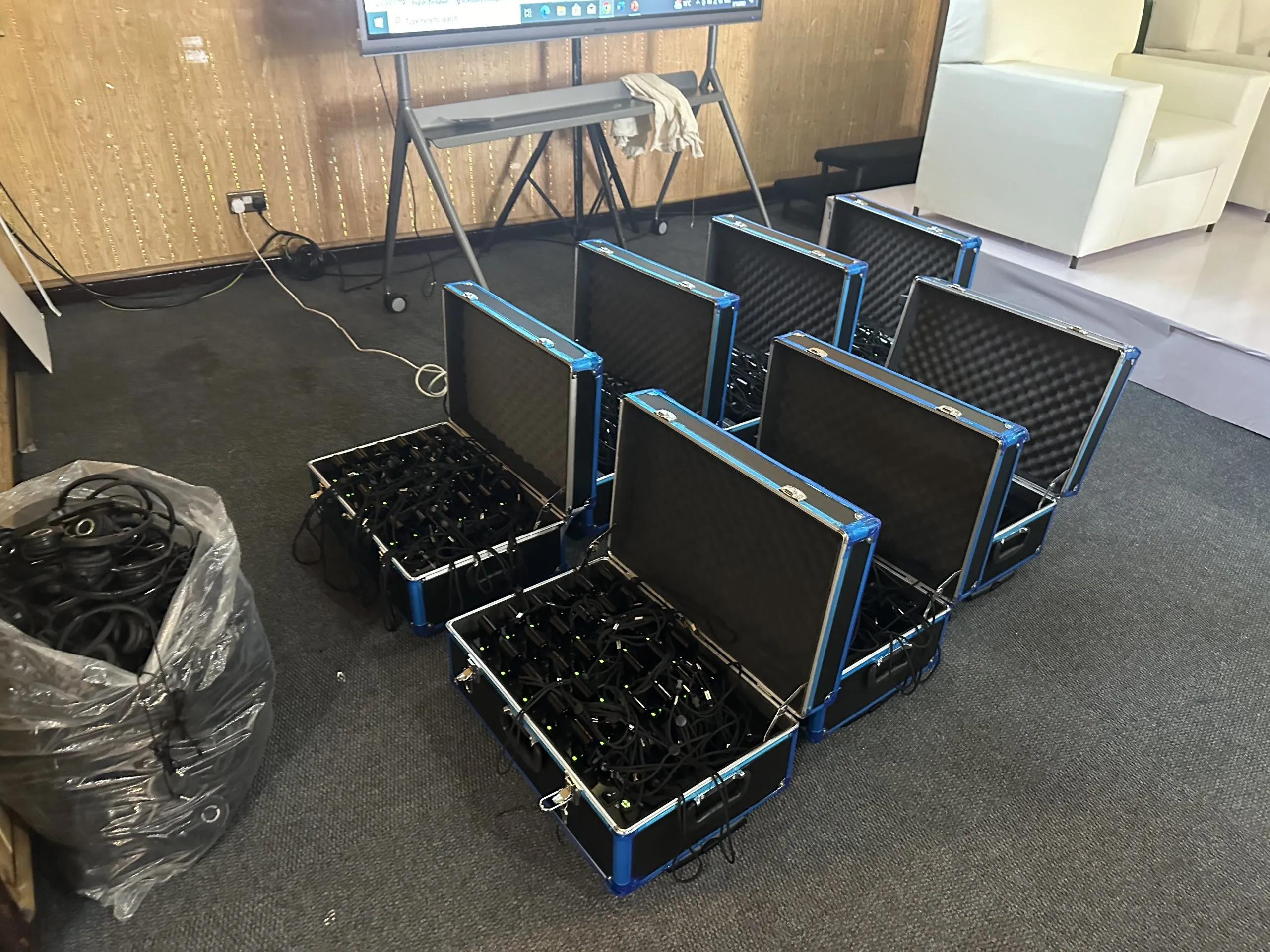
If you distribute handsets, decide now how they are charged (individual chargers or a charging case), what battery technology is used, how units are counted out and back in, and how headsets are cleaned between users. Post-pandemic, hygiene is a procurement question, not a housekeeping detail.
Accessibility
Ask whether the system can feed a hearing loop or interface with hearing aids, and whether that is a separate output or shared. In public buildings this is usually a legal obligation, and retrofitting it later is far harder than specifying an output at the start.
How itc's interpretation chain is put together
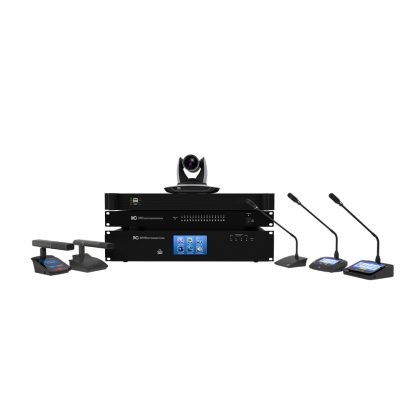
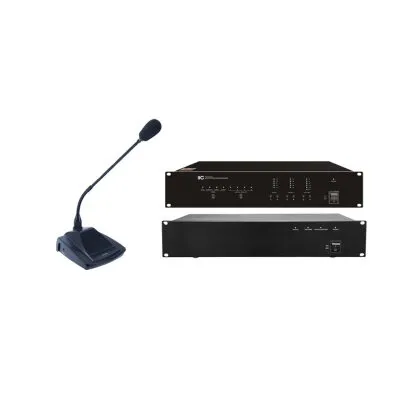
Because we build the whole chain — interpreter desk, transmitter, receiver and the delegate units that carry the language channels — the choice above can be made per room rather than per brand.
Interpreter desk
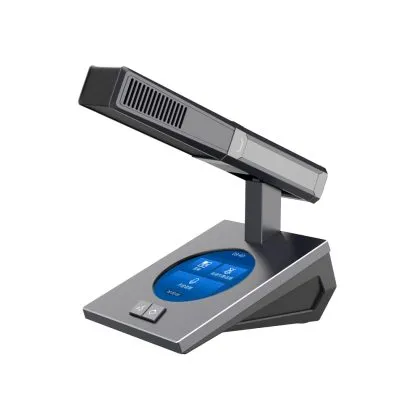
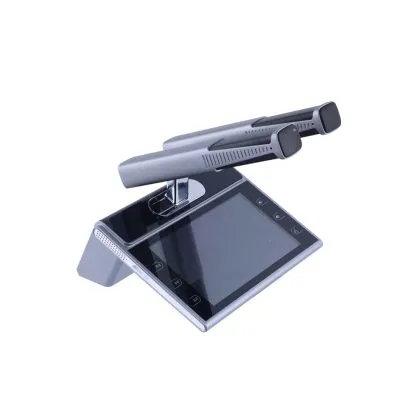
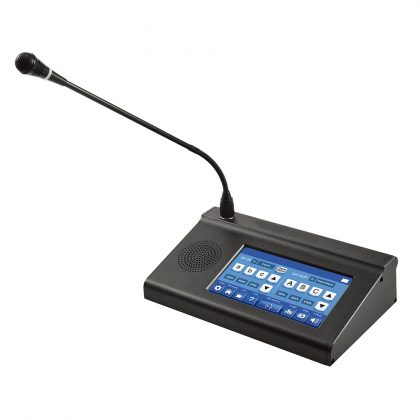
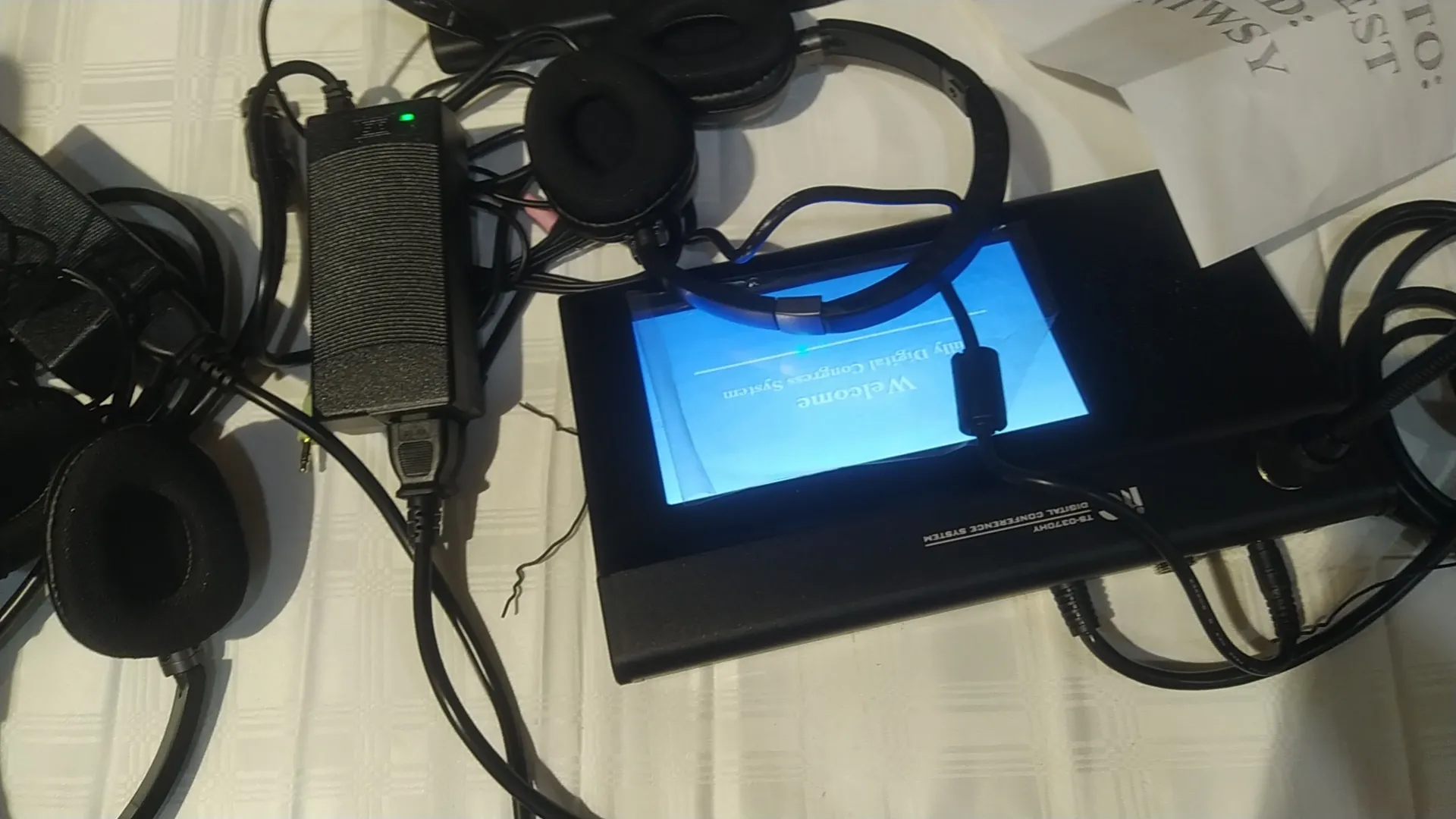
The TS-0370HY interpreter unit supports 63 interpretation channels with up to six interpreter units working on one language channel, three preset input channels with A/B/C shortcut keys for fast switching, 48 kHz sampling with internal DSP processing, and 80 Hz – 16 kHz frequency response. Language assignment per channel is preset, so a booth can be reconfigured between sessions without rewiring.
Infrared distribution
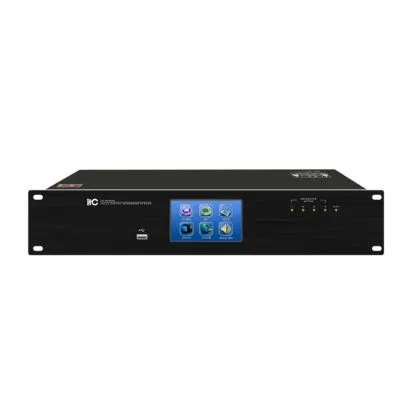
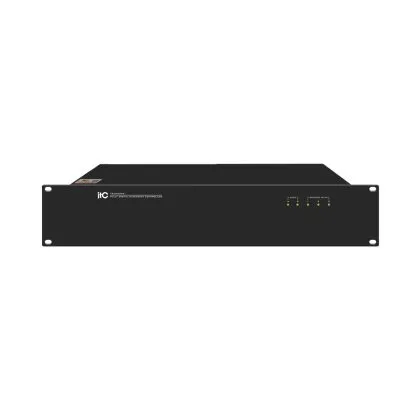
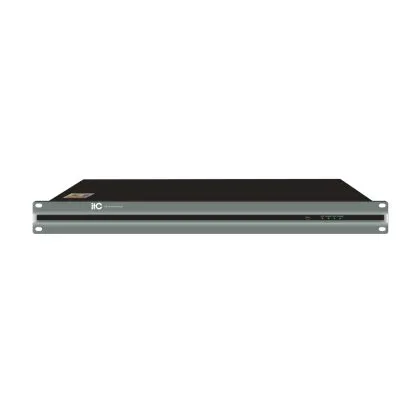
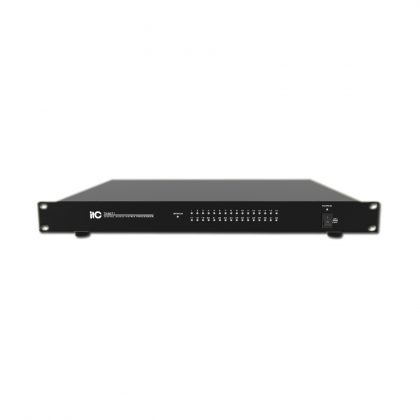
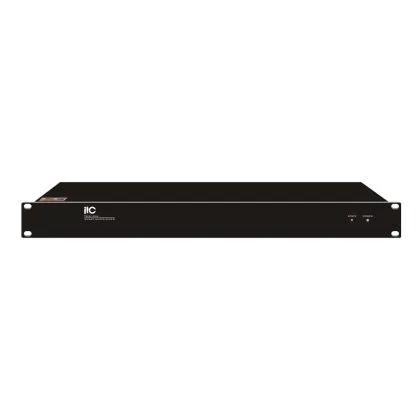
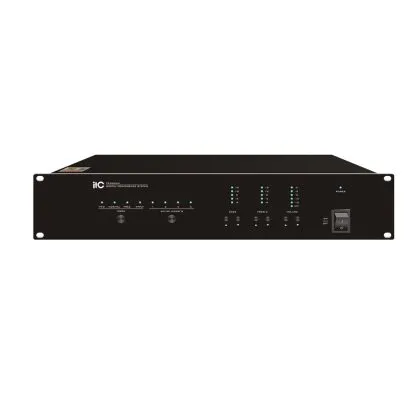
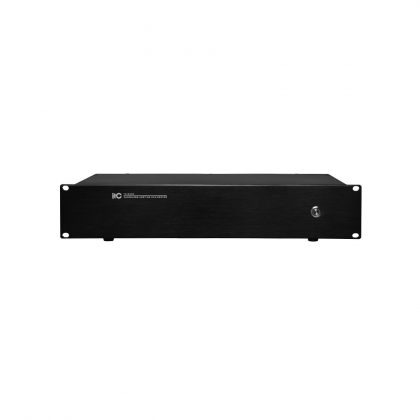
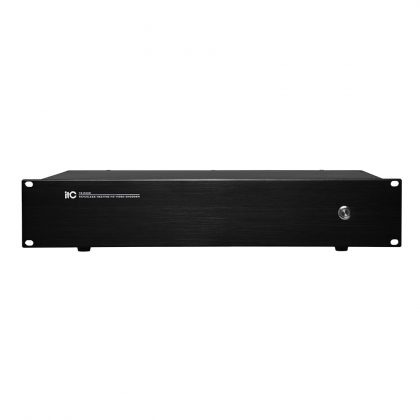
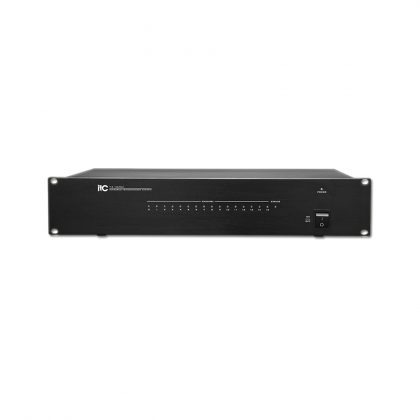
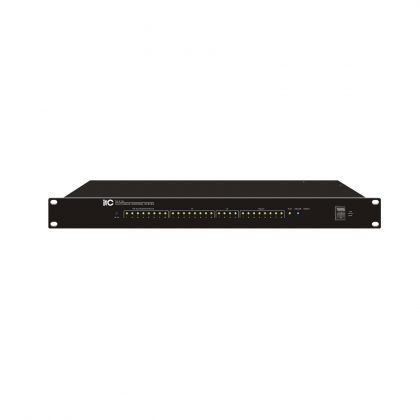
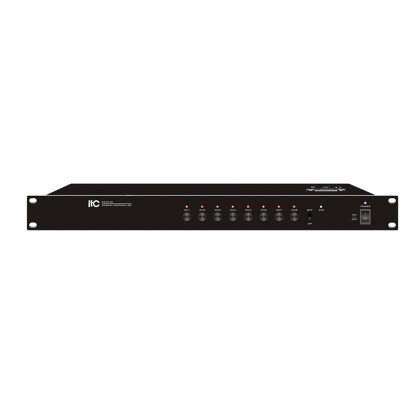
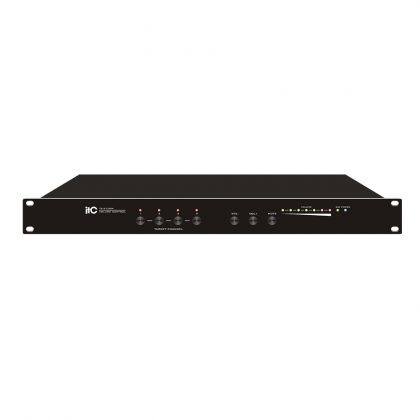
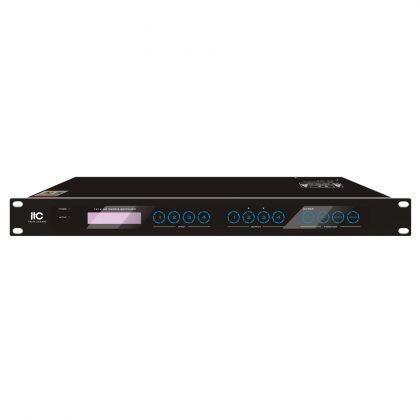
The TS-0370H-8 transmitter carries 8 audio outputs and two BNC outputs for radiator panels; the TS-0370H-16 carries 16 outputs and four BNC outputs. Both operate in the 2–6 MHz range (IEC 61603 BAND4), which is chosen specifically to avoid interference from high-frequency dimming and LED driving light sources — the single most common cause of buzz in infrared systems. Both take conference audio over the system cable directly from the digital conference chain.
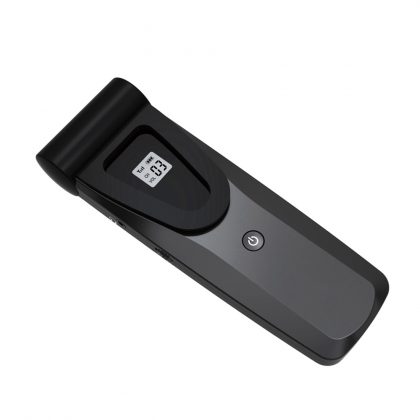
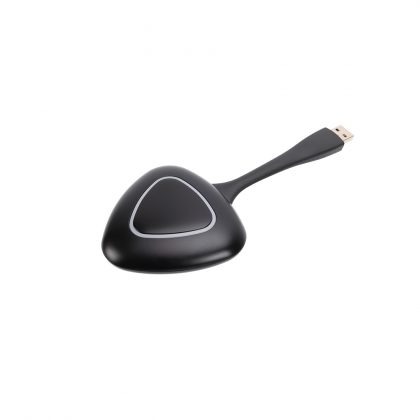
On the listener side, the TS-0370HD receiver handles 16 channels with an LCD that shows channel number, battery level and signal status — which matters more than it sounds, because "my receiver is not working" is usually a flat battery or a lost signal, and the delegate can see which.
Channel selection at the seat
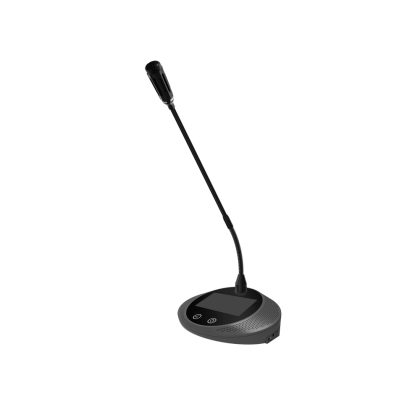
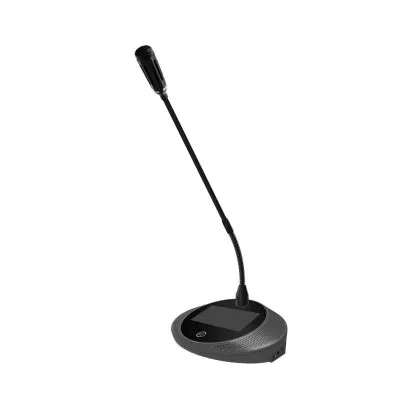
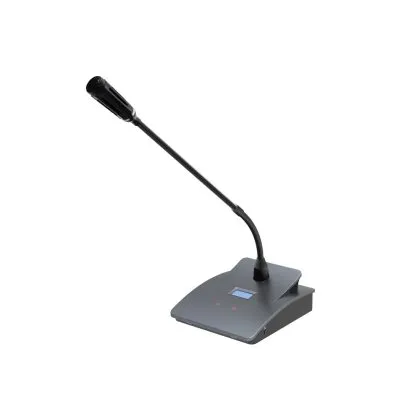
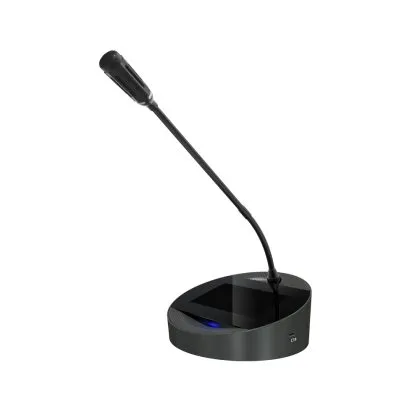
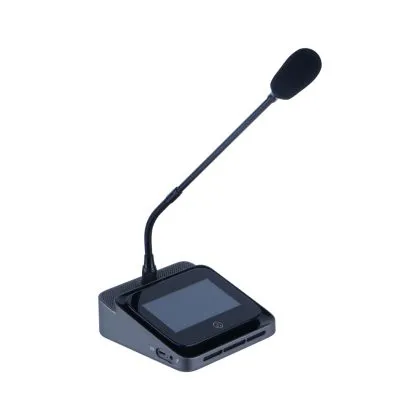
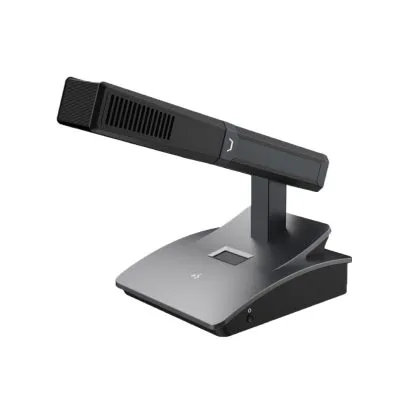
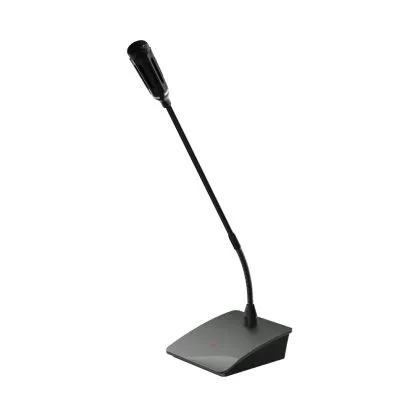
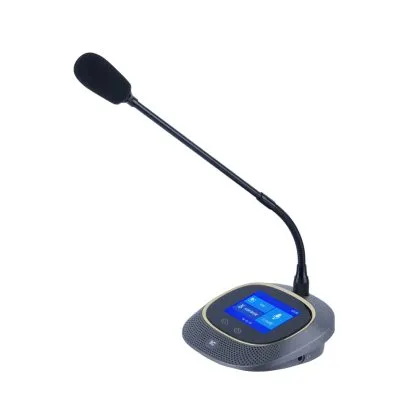
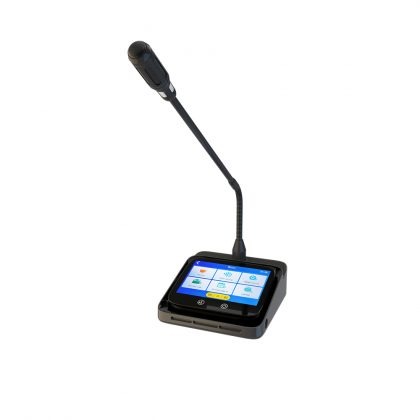
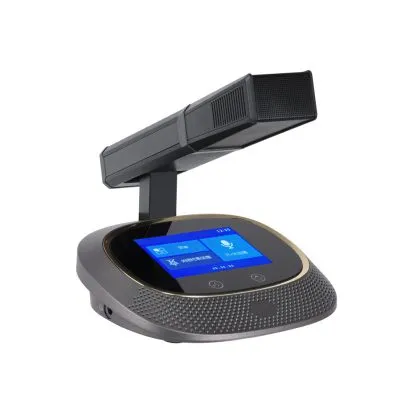
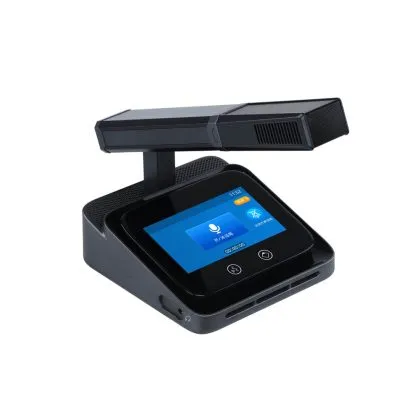
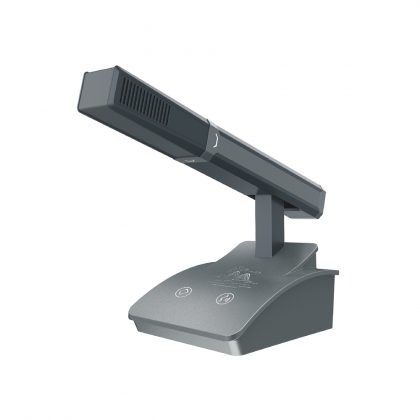
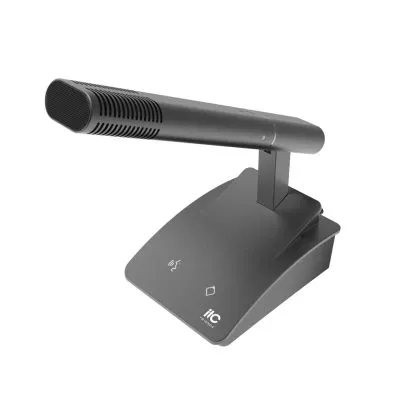
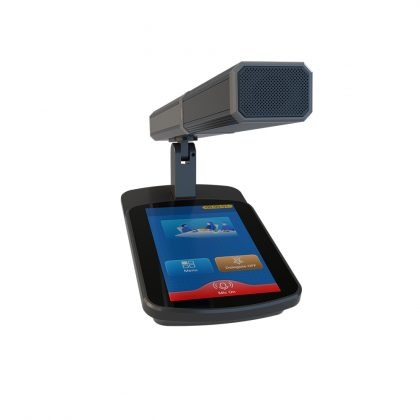
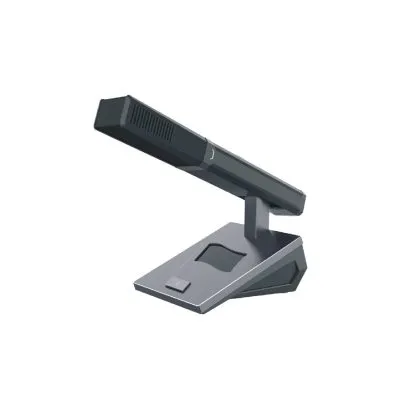
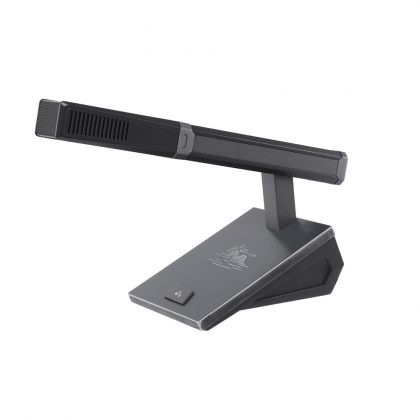
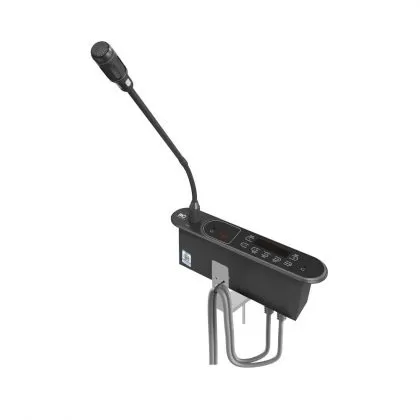
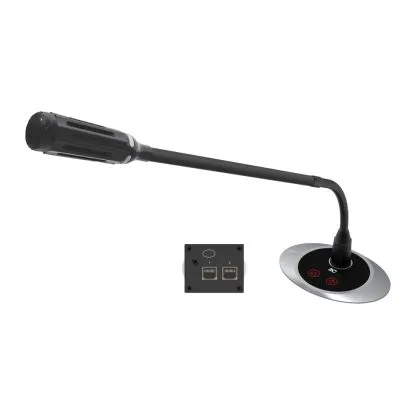
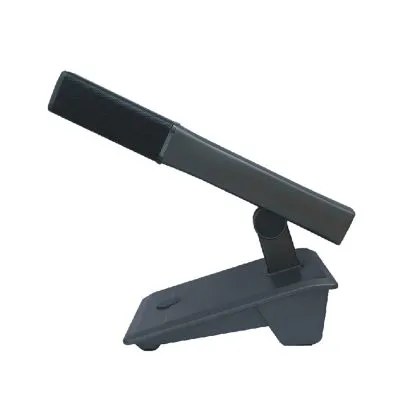
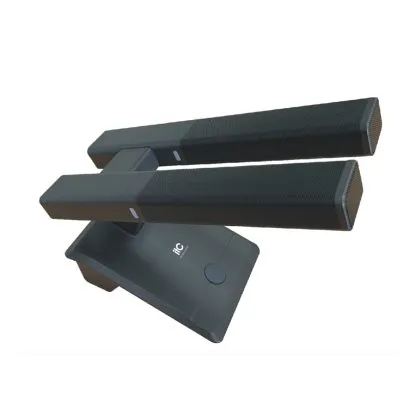
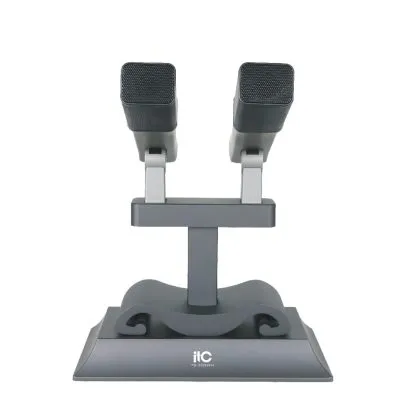
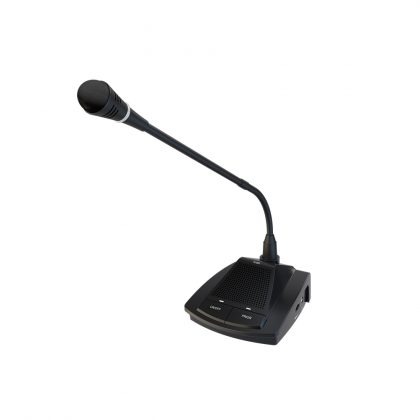
Where the chamber is fixed and delegates sit at permanent positions, the language channels can be delivered to the TS-0310 series delegate unit, which supports 63 + 1 channels with selection at the seat. That removes the handset for delegates while leaving receivers available for the gallery, press and observers.
One honest limitation, as with any supplier: IR coverage is a site-specific calculation. Send us the room drawing, ceiling height and seating layout before the tender, and we will size the radiator layout rather than quote a generic number. The simultaneous interpretation range and the interpreter unit range list the current models; the system overview explains how the chain is assembled end to end.
Frequently asked questions
How many languages can one system handle?
With a 16-channel infrared transmitter, 16 languages plus the floor language in one band. With seat-level channel selection on current digital units, up to 63 + 1. Real events rarely exceed six simultaneous languages, so the constraint is almost always the number of interpreters and booths, not the electronics.
Does infrared work in a room with large windows?
It works, but the design changes. Sunlight contains infrared energy and will desaturate receivers near a window, so radiators must be positioned to cover those seats from another angle, and receivers should not face the window. If the room is a fully glazed atrium used at midday, radio is the safer choice.
Do we need a licence for RF interpretation?
In most countries, yes — either a licence or at least registration and coordination of the frequencies used. This is a project task with a lead time, and it differs by country. Infrared requires no radio licence at all, which is one reason it dominates in government venues. Confirm the local requirement before the tender, not after the equipment arrives.
Can delegates just use a phone app instead?
For informal meetings, yes, and it is getting better. For formal proceedings the problems are latency, battery, Wi-Fi congestion and — most importantly — the absence of an auditable, dedicated audio path. A phone that drops out during a vote or a ruling is not acceptable in a chamber, which is why dedicated receivers and seat-level channels still dominate there.
Can one system serve two adjacent rooms?
With infrared, yes — light does not pass through the wall, so the two rooms are naturally isolated, provided each has its own radiator set. With radio, no: the signal spills, and a confidential session in one room can be overheard in the other. This is the clearest single argument for infrared in multi-room government buildings.
Next step
Send us the room layout, the number of languages, and whether any session is closed, and we will recommend one path — IR, RF or seat-level channels — with a radiator or receiver count and a test plan. Contact our project team with your floor plan; if you are still at the concept stage, start with how simultaneous interpretation works.
Relevant News
-

Professional Sound System for Bar/ Club
Jun 22,2022The slow rocking bar is mainly used for entertainment and dancing of guests, as well as high-end entertainment places for slow rocking, disco music playing and song singing. It has high requirements for the effect of sound atmosphere. The appeal of the speaker is very strong. It can create an undulating and magnificent effect and immerse people in music. Quiet bar is mainly used to adjust the atmosphere. It can create a beautiful, suitable and comfortable sound quality, which will…
-

Paperless Conference System for Court Solution
Jun 14,2023The national policy vigorously promotes the paperless conference process, the practicability of the paperless conference, the overall environmental requirements of high efficiency, energy saving and environmental protection, and the paperless conference system is imperative. As a national judicial organ, the court responds to the national call for energy conservation and environmental protection and strives to improve the decision-making level of the court and improve the efficiency of government affairs with the deepening of institutional reform. It is necessary to build…
-

Intelligent Digital Conference System Solution
Oct 10,2022Intelligent Digital Conference System, to achieve the meeting operation procedure is simple, the function of diversified management scheme, including sound transmission stability, will discuss the order so that the meeting room is highly intelligent. A more complete conference system probably contains the following several important factors: speech, voting, sign-in, photo tracking, simultaneous interpretation, the actual operation of the conference process and other functions together. Multimedia Conference System Solution : In order to improve the daily administration center and the efficient…